Akalbodhan

In his teachings, Sage Medhas first narrated the tale of Mahishasuramardini, the slayer of the buffalo demon, followed by the story of Chanda and Munda’s destruction. He proclaimed that Devi Chandi, consort of the Supreme Brahman, is the great cosmic power whose worship alone rescues humanity from suffering and peril. At the sage’s advice, Raja…

Details

The Roots of Durga Puja: From Ritual to Celebration

Durga Puja, Bengal’s grandest festival today, has a history as layered as the rituals themselves. One popular account credits Raja Kangsanarayan of Taherpur with organizing the first grand royal Durga Puja in the late 16th century. Appointed as Diwan of Bengal and Bihar under Emperor Akbar, Kangsanarayan later retired to Rajshahi and turned to religion…

Details

Mahishasura as the Eternal Metaphor of Disorder

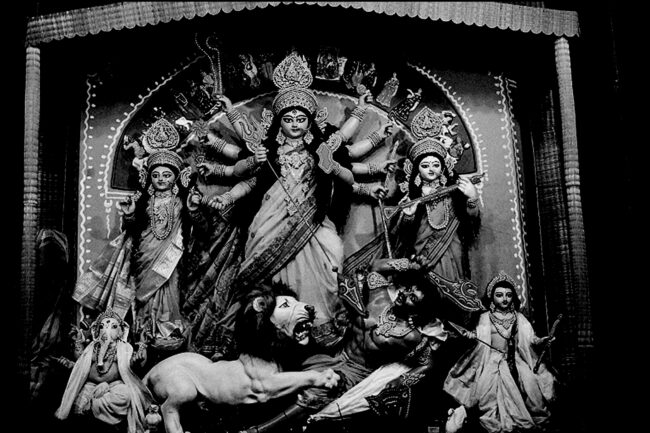
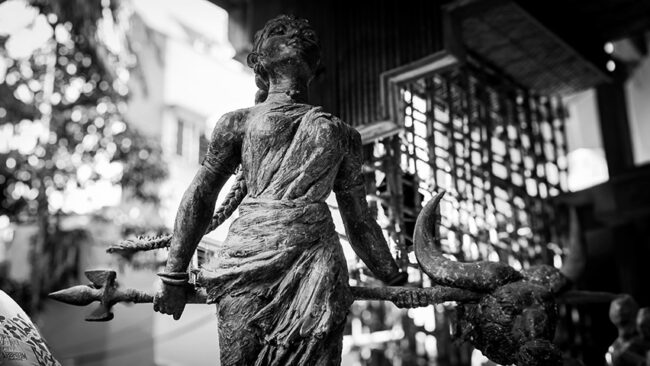
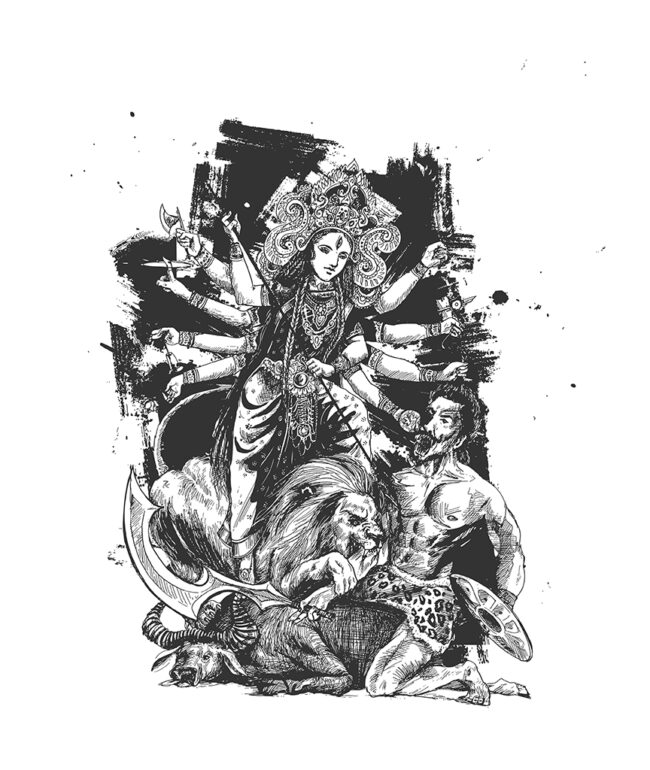
Mahishasura In Hindu scriptures, Mahishasura was an asura. Mahishasura’s father Rambha was king of the asuras, and he once fell in love with Princess Mahishi, who was cursed to be a water buffalo; Mahishasura was born out of this union. He is, therefore, able to change between human and buffalo form at will (mahisha is Sanskrit word for buffalo). The two demon brothers Rambh…

Details

Ten Arms, Thousand Themes: Kolkata’s Durga Puja as Living Museum

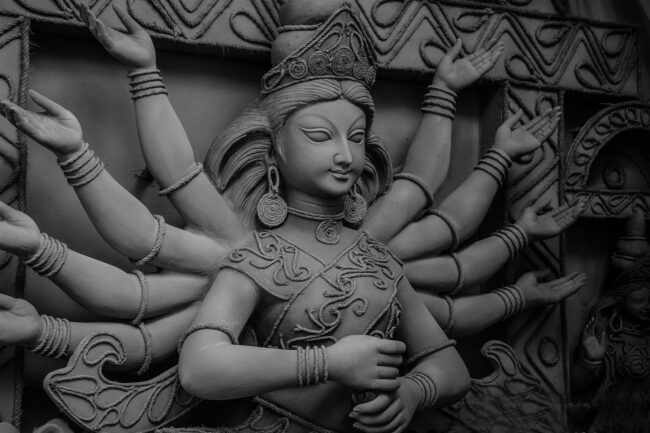
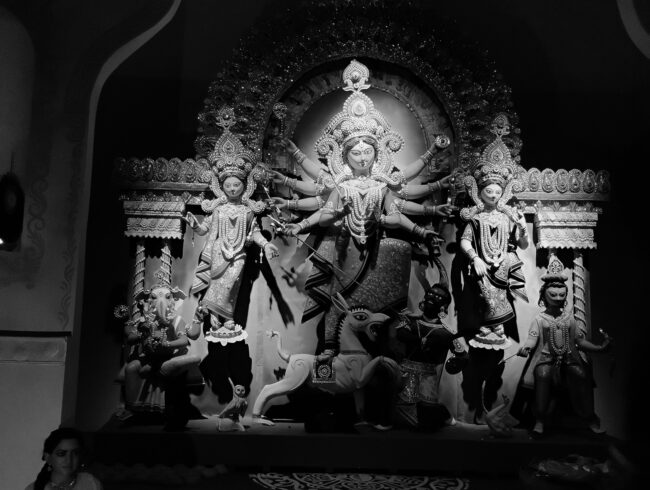
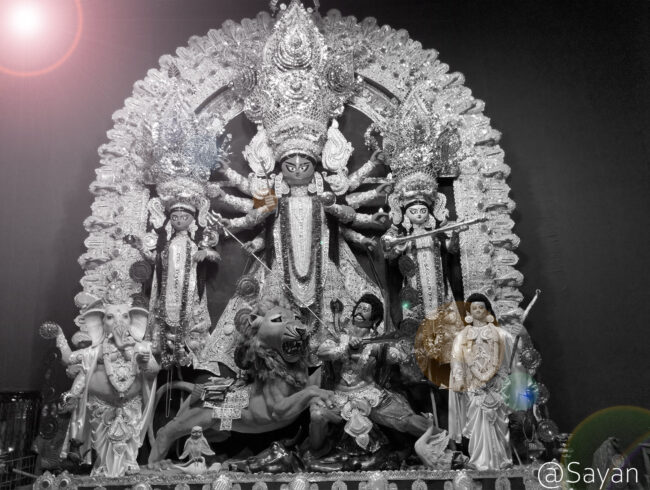
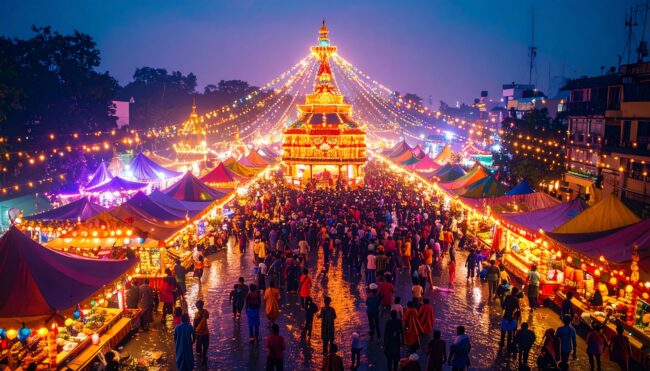
For a few incandescent days each autumn, Kolkata stops being a city and remembers it is a story. The pavements turn into footnotes, the avenues into chorus lines, and every neighborhood—para, lane, bylane—becomes a luminous stanza in the poem of Durga Puja. Clay breathes. Bamboo whispers. The conch calls. And the Mother arrives—not only as…

Details

The Evolution of Durga Puja in Bengal

Mythical and Scriptural Roots: The worship of goddess Durga originates from ancient Hindu scriptures, especially the Devi Mahatmya (part of the Markandeya Purana, roughly composed by the 5th-6th century CEM. This text celebrates the divine feminine power (Shakti) who defeats the buffalo demon Mahishasura, symbolizing cosmic victory of good over evil. Early Bengal Practices: While…

Details

Creation of the Saktis: Philosophical and Mythological Details

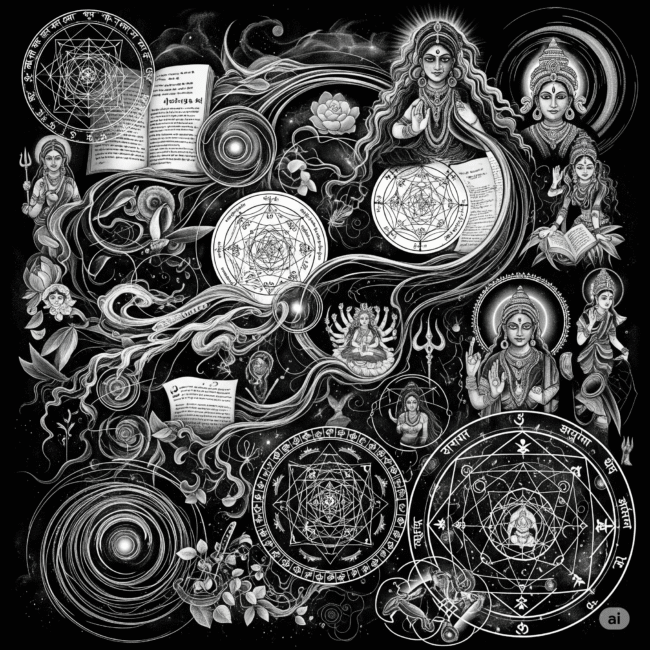
1. Devi as Primordial Power The text opens by establishing Nirguna Bhagavati—the formless, transcendent goddess—as the foundational reality from which all existence emerges. Identified variously as Adi Parashakti or Brahman, she is posited as both the origin and sustaining principle of the cosmos. All creative, preservative, and dissolving forces in the universe ultimately derive their…

Details

Kumartuli-Clay, Tradition, and Craft

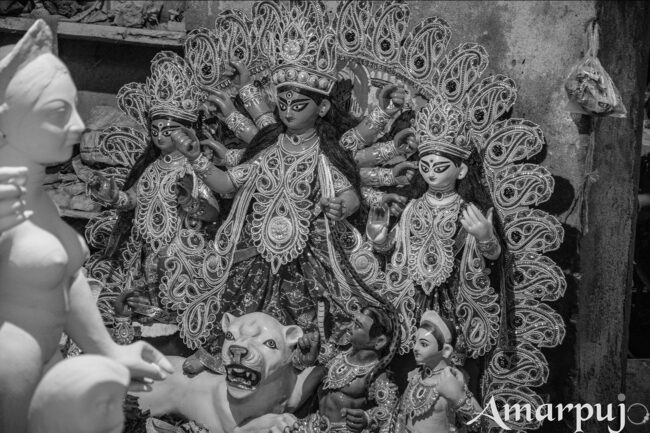
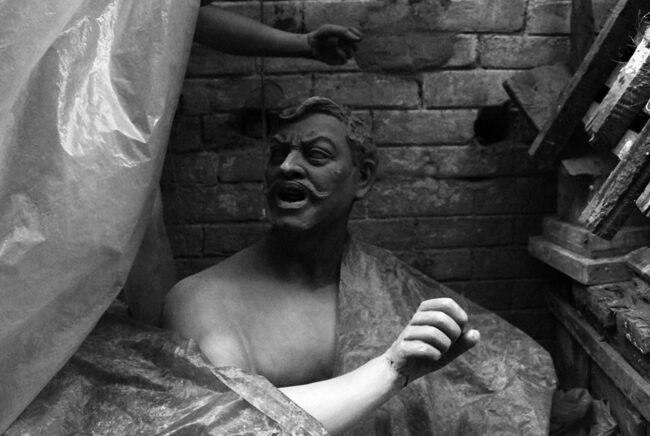
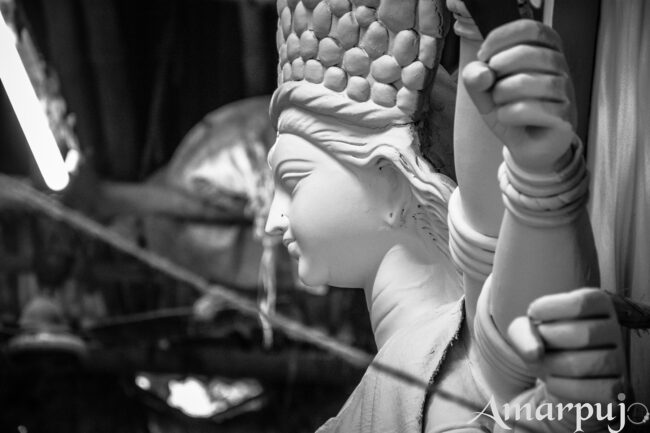
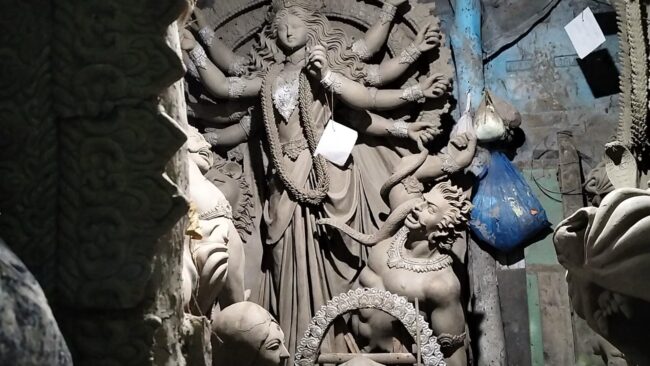
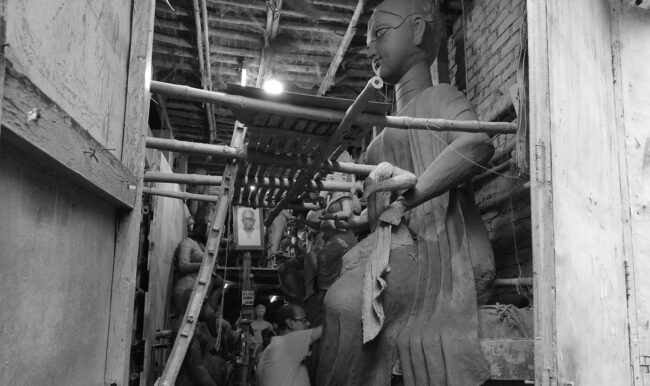
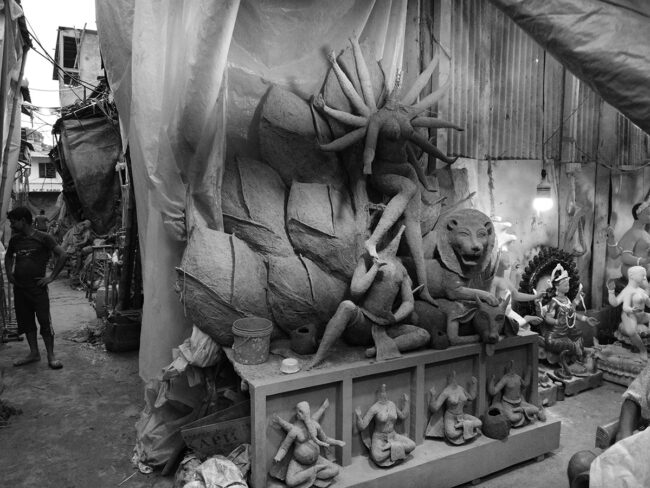
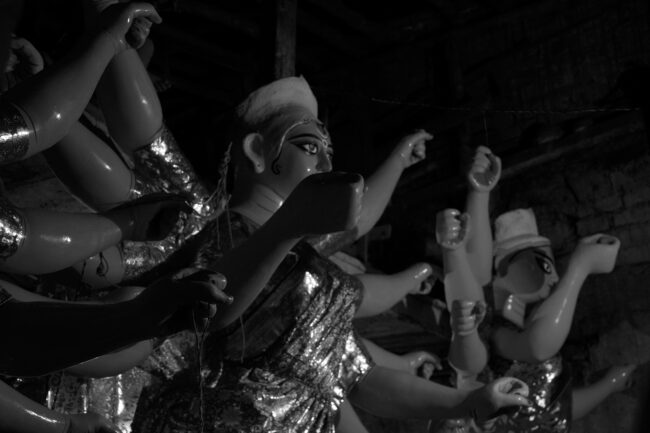
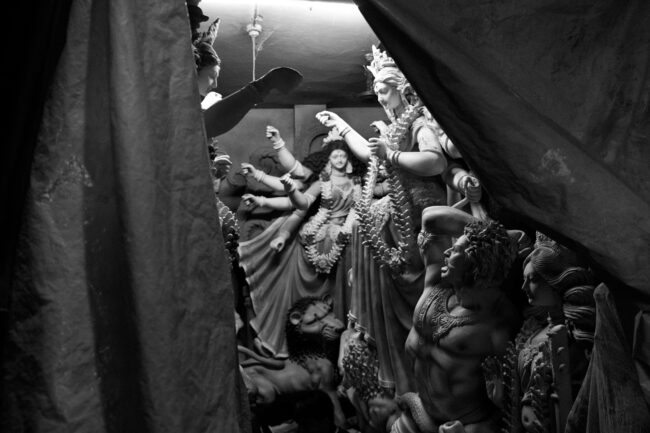
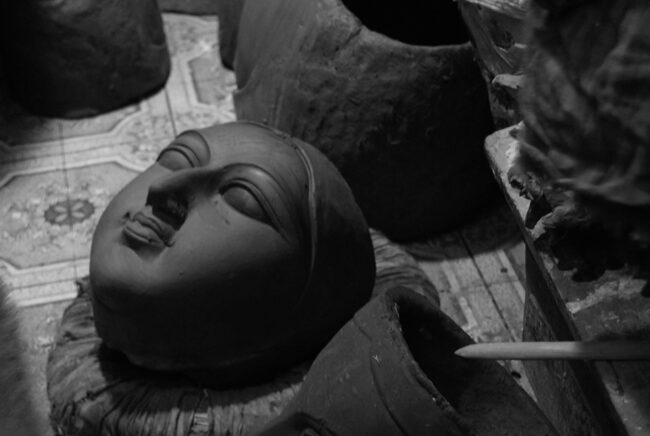
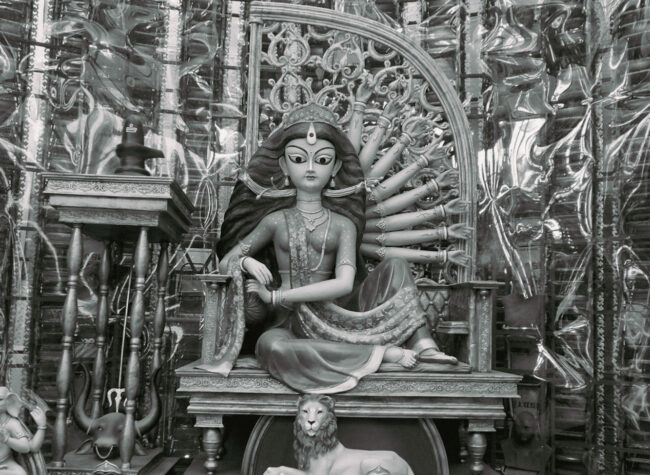
Kumartuli, which translates to “the potters’ quarter,” emerged in North Kolkata during the late 18th century, following the British establishment of Fort William after the Battle of Plassey in 1757. In the aftermath, the British administration organized the city by allocating specific neighborhoods to various artisan communities, designating Kumartuli for potters and idol-makers. Initially, Kumartuli…

Details

Navadurga: Nine Manifestations of Supreme Power

The Navadurga: Nine Manifestations of Supreme Power (as detailed in the Devi Purana)….Significance of Navaratri The Devi Purana presents nine distinct forms of the goddess Durga, each embodying a unique aspect of her divinity. These manifestations are venerated during Navaratri, with each day dedicated to one form, and each bestowing particular blessings upon devotees. Below…

Details

Trends in Durga Puja Artistry

The artistry of Durga Puja is dynamic, reflecting societal changes and artistic innovations. Thematic Depth and Social Commentary: More and more pandals are moving beyond mere aesthetics to convey powerful social, environmental, or cultural messages. Artists often use their installations to comment on issues like climate change, migration, women’s empowerment, preserving heritage, or the breakdown…

Details

Glipmse from Mythology about Durga

The Devi Bhagavata Purana—sometimes referred to as the Devi Bhagavatam, Bhagavata Purana, or Srimad Devi Bhagavatam—is a foundational Sanskrit text, recognized as one of the eighteen Mahapuranas in Hindu literature. For practitioners devoted to Devi (the Goddess), this scripture holds particular significance, effectively serving as a central sacred text. The Purana is extensive, spanning twelve…

Details

More Than a Festival: The Socio-Economic Tapestry of Durga Puja

In Bengal, Durga Puja is more than just a religious event; it is a unique celebration. This festival combines emotion, tradition, creativity, and commerce into a grand annual spectacle. While many consider it five days of festivity, Durga Puja actually involves months of preparation, creating jobs and supporting local economies. It stands as one of…

Details