Mythical and Scriptural Roots:
The worship of goddess Durga originates from ancient Hindu scriptures, especially the Devi
Mahatmya (part of the Markandeya Purana, roughly composed by the 5th-6th century
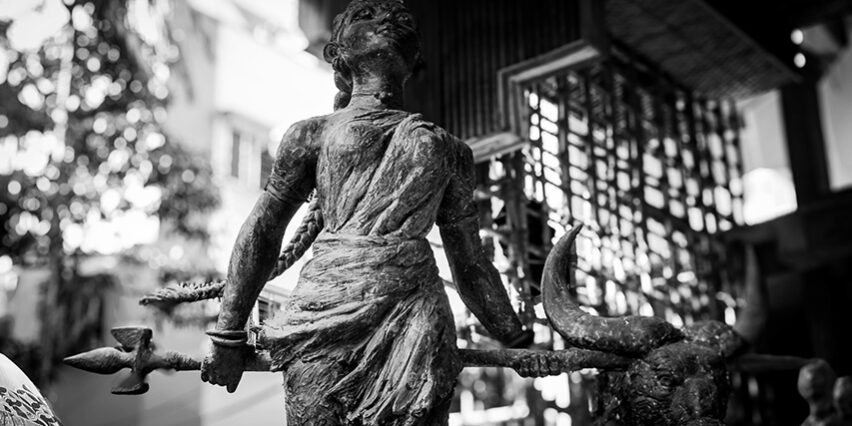
CEM. This text celebrates the divine feminine power (Shakti) who defeats the buffalo demon
Mahishasura, symbolizing cosmic victory of good over evil.
Early Bengal Practices:
While the worship of the Mother Goddess was widespread in ancient Bengal, including tribal
and folk traditions, large-scale Durga Puja as an annual autumn festival with elaborate rituals
and idol worship took shape in later centuries, likely during the medieval period 13th-16th
centuries).
Archaeological excavations across Bengal reveal terracotta figurines of mother goddesses
dating back to the Mauryan period L3rd century BCEM. At Chandraketugarh in North 24
Parganas, excavated figurines show multi-armed goddess figures that bear resemblance to laterDurga iconography. Similarly, at Mahasthangarh in Bangladesh, Gupta period L4th-6th century CE) sculptures depict divine feminine figures with weapons, suggesting early forms of warrior goddess worship.
The Pala Empire L8th-12th centuries) particularly patronized Shakti worship. King Dharmapala
(c. 770-810 CE) and his successors commissioned numerous temples dedicated to various forms of Devi. The famous Somapura Mahavihara in Bangladesh contains sculptural evidence of sophisticated goddess worship that influenced later Bengali traditions.
During the Bengal Sultanate (1352-1576), Hindu festivals like Durga Puja adapted to changing political circumstances. Historical records from the court of Sultan Alauddin Hussain Shah (1494-1519) indicate that Hindu festivals were tolerated and even occasionally patronized. The Chaitanya Mahaprabhu movement during this period, while primarily Vaishnava, incorporated elements of Shakti worship that enriched the devotional landscape.
Krittibas Ojha’s Bengali translation of the Ramayana (15th century) includes detailed
descriptions of Rama performing Durga Puja before his battle with Ravana, establishing the
Akalbodhan (untimely awakening) tradition that became central to Bengali Durga Puja
mythology.
Maharaja Nabakrishna Deb (1733-1797) not only initiated the first grand Kolkata Durga Puja but revolutionized its social and cultural dimensions: The family’s puja traditions include unique rituals:
The Detailed Zamindari Era (16th – 18th Century)
Comprehensive Analysis of Pioneer Families
The Shobhabazar Rajbari Legacy (1757 – Present)
Political Context: His 1757 puja celebrated the British victory at Plassey, establishing a
precedent for integrating contemporary politics with religious celebration
Artistic Innovation: Commissioned the finest Kumartuli artisans of his era, establishing
artistic standards that influenced generations. Cultural Fusion: Invited British officials, Portuguese merchants, and Armenian traders, creating Bengal’s first truly cosmopolitan religious celebration.
The Sabarna Roy Choudhury family is one of Bengal’s oldest and most respected aristocratic lineages, dating back over 400 years.
The family trace their ancestry to Gangadhar Roy, who was granted the title of “Roy Choudhury” by the Mughal Emperor in the early 17th century.
They were notable zamindars (landowners), and in 1698, the family famously transferred landlord rights (zamindari) of the villages of Sutanuti, Gobindapur, and Kalikata to the British East India Company—lands on which modern Kolkata was founded.
Durga Puja Tradition
The Sabarna Roy Choudhury family’s Durga Puja is among the oldest in Bengal, and it is widely acknowledged as one of the oldest continuity household Pujas (“bonedi bari pujas”) in existence.
Their Durga Puja was first instituted in 1610, making it over four centuries old.
The Puja is said to have been started by Lakshmikanta Roy Choudhury, a prominent family patriarch.
Unique Features & Traditions
The family’s puja is not a single event but is held at multiple ancestral houses in Barisha (present-day southern Kolkata). The most famous are:
- Aathchala
- Baro Bari
- Mejo Bari
- Benaki Bari
The “Aathchala Puja” is considered the most prominent, both ritually and historically.
The Durga idol here follows older iconography, maintaining traditional forms and rituals rarely seen in modern community pujas.
Offerings, rituals, and strict adherence to Shakta scriptures are observed, with the family’s own priests officiating.
The Puja is steeped in tradition, with age-old customs like the ‘Chokkhu Daan’ (painting the eyes of the idol) done with much ritual, and special community feasts (bhog) following family recipes.
Historical Importance
The Sabarna Roy Choudhury Puja has attracted the attention of historians, researchers, and art lovers for its rare continuity, preservation of ritual, and living heritage.
The puja is a vital example of Bengal’s bonedi (aristocratic) puja tradition, offering a vivid glimpse into how early zamindar families celebrated Durga Puja—a stark contrast to the large community sarbojanin pujas that dominate Kolkata today. The family archives and oral traditions not only chronicle the evolution of Durga Puja but also preserve historical narratives regarding the growth of Kolkata.
Bengal Renaissance and Cultural Flourishing LLate 19th – Early 20th Century)
Link to Bengal Renaissance: The ideological and cultural awakening during this period deeply influenced Durga Puja,ma king it more than a religious festival. It turned into an artistic and intellectual celebration of Bengali identity.
Cultural Patronage: Rabindranath Tagoreʼs involvement infused the Puja with literary and musical creativity.
His songs (Agamani, Vijaya) are still integral to Puja rituals.
Other luminaries like Bankim Chandra Chattopadhyay, Michael Madhusudan Dutt, and Ananda Coomaraswamy contributed to enriching the cultural canvas of the festival.
Innovative Pandals & Themes: Artists started experimenting with innovative themes for pandals and sculpture, reflecting contemporary socio-political realities and popular culture.
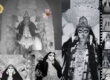
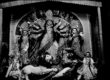
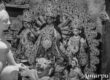
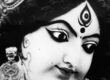
Image Courtesy : Sayan Biswas (Please do not use without permission)