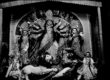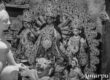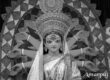
In many parts of Bengal, the worship of Devi Jagaddhatri is performed on the ninth day (Navami Tithi) of the bright fortnight (Shukla Paksha) of Kartik month. Although Jagaddhatri Puja is not celebrated as widely as Durga Puja, and is hardly known outside Bengal, the Goddess holds a supreme place among the Tantric practitioners.
In the Tantric path, Jagaddhatri is regarded as the manifested form of the Supreme Brahman — the visible embodiment of the Divine Consciousness sought by the devotee. The Supreme Brahman is the union of Sat (existence), Chit (consciousness), and Ananda (bliss) — and the quest for that eternal bliss is the mystery of the Goddess’s form.
When one meditates with deep concentration, this search gradually reveals the nature of the desired Brahman — thus unfolding the knowledge of Brahman (Brahmavidya).
Devi Jagaddhatri herself is Brahmavidya incarnate.
Though formless by nature, she manifests herself as Parama Prakriti (the Supreme Nature), and through the processes of creation, preservation, and dissolution, she pervades the entire universe. This Vishweshwari (Lady of the Universe) reveals herself through all living beings. Every form — animate or inanimate — and above all, humankind, is her highest evolved expression.
Within the human body, she dwells as Consciousness (Chaitanya) — formless yet ever-present — and as the embodied form of that Consciousness.
That formless, all-pervading Consciousness manifests in living beings as Kundalini, the coiled primal energy — the Maha Shakti herself.
It is she who, transcending the three gunas (qualities of nature), appears to the spiritual seeker as the manifested Brahman.
Before delving deeper into the philosophy of Jagaddhatri, one must understand the Kamini Tattva (the Principle of Desire).
Spiritual practice (Sadhana) is, in essence, a quest — a quest to realize the indissoluble unity between the individual self and the Supreme.
The true search lies in discovering that eternal bliss which already resides within the soul — though its presence is easily sensed, its dwelling place is in the most subtle and inaccessible realms.
Even desirelessness (Nishkama) is a kind of desire — and thus, Kamini Tattva marks the first step in the seeker’s path.
To transform outward impulses (pravritti) into inward withdrawal (nivritti) is itself a profound challenge.
As long as the seeker cannot turn his energy inward, he cannot realize the true nature of Chidananda (conscious bliss).
When the seeker gathers and focuses his vast spiritual energy, conquers his impulses, and directs them toward inner renunciation, Kundalini Kamini aids him in his ascent toward the Supreme. She fulfills the seeker’s longing for desirelessness.
The mystery of Kamini and the essence of Jagaddhatri are bound by the same divine thread — the only difference being symbolic:
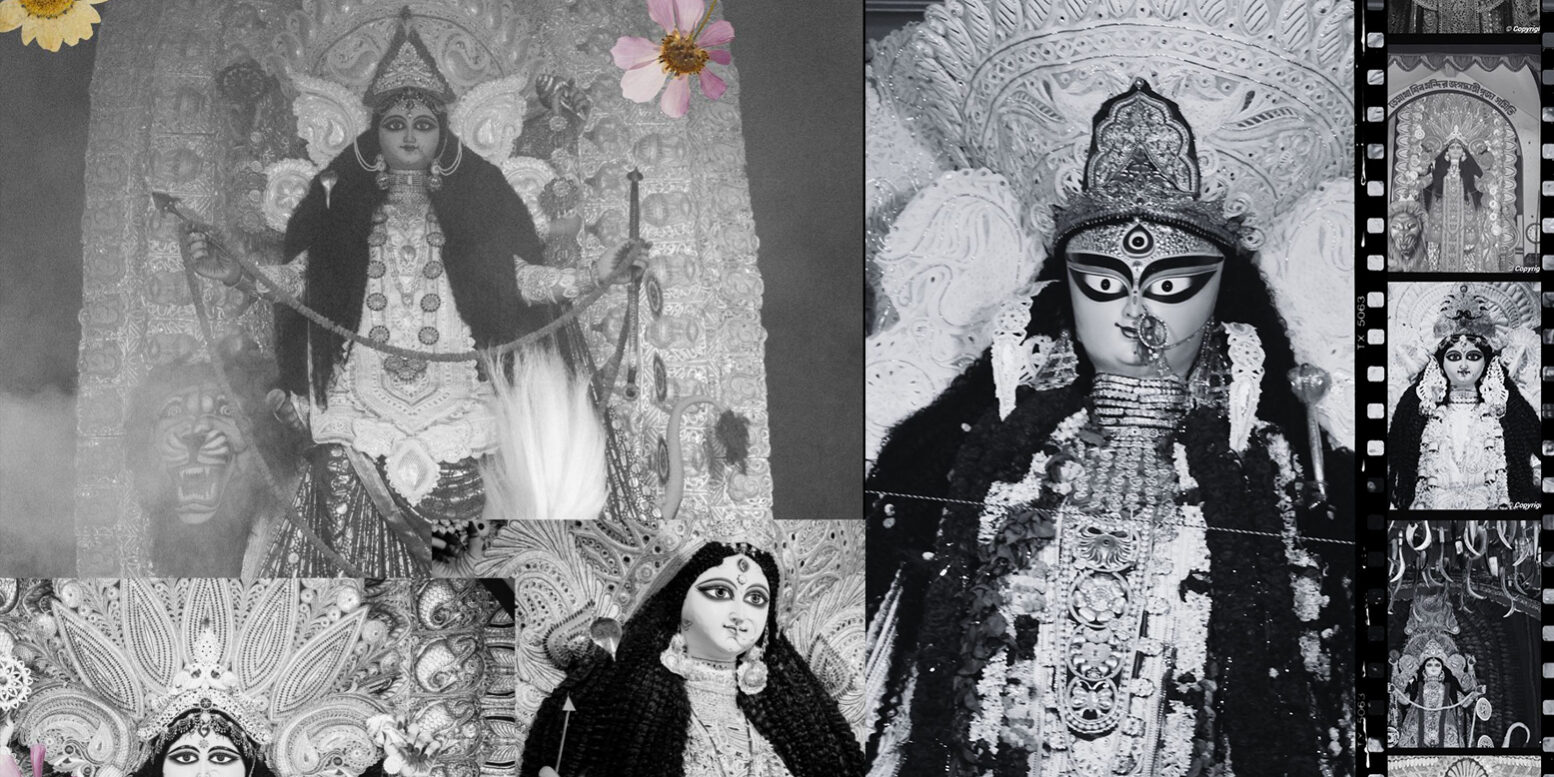
In the image of Jagaddhatri, the lion (symbol of ego or mind) is subdued beneath the feet of the goddess, representing mastery over desire and delusion.
But in the iconography of Kamini Devi, that motif is absent, as described in the verse:
“Mounted on a lion, red in complexion,
Four-armed and adorned with various ornaments,
Draped in crimson garments,
Holding conch, discus, bow, and arrows in her lotus hands —
One should first meditate upon Kamini,
Then proceed with mantra and worship.”
“সিংহস্কন্ধসমারূঢ়াং রক্তবর্ণাং চতুর্ভূজাম।
নানালঙ্কারভূষাঢ়্যাং রক্তবস্ত্র বিভূষিতাম্।
শঙ্খ চক্র ধনুর্ব্বান বিরাজিত করাম্বুজাম্।।
কামিনীং প্রথমং ধ্যাত্বা জপ পূজাং সমাচরেৎ।।”
Image Courtesy : Sayan Biswas (Please do not use without permission)