Akalbodhan

In his teachings, Sage Medhas first narrated the tale of Mahishasuramardini, the slayer of the buffalo demon, followed by the story of Chanda and Munda’s destruction. He proclaimed that Devi Chandi, consort of the Supreme Brahman, is the great cosmic power whose worship alone rescues humanity from suffering and peril. At the sage’s advice, Raja…

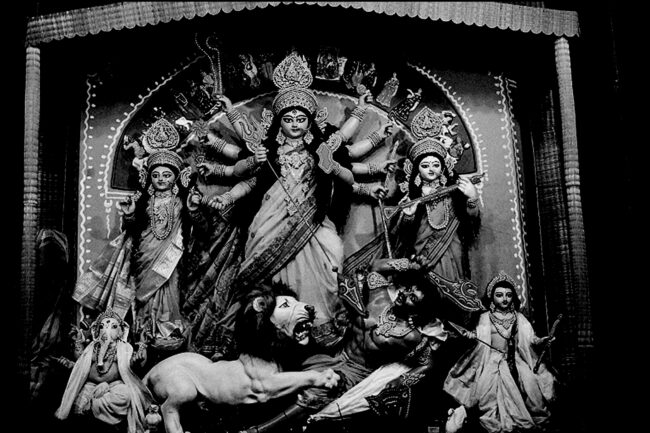
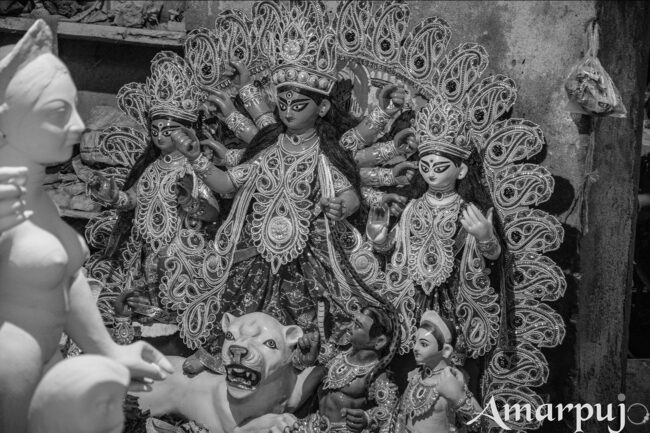
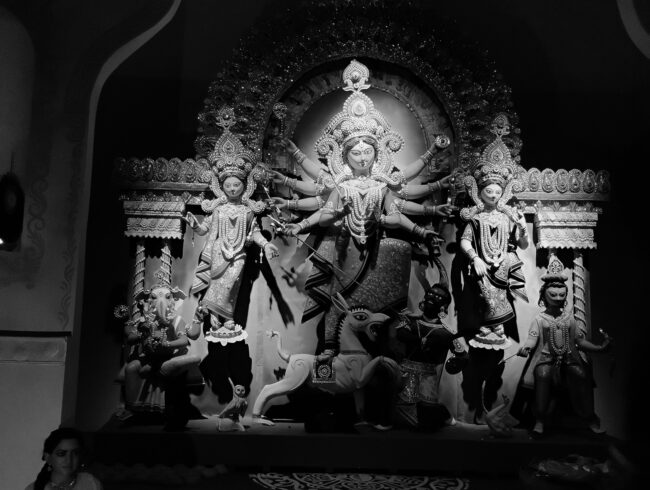
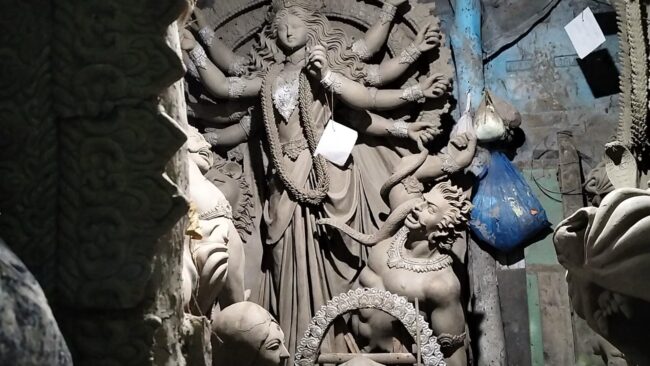
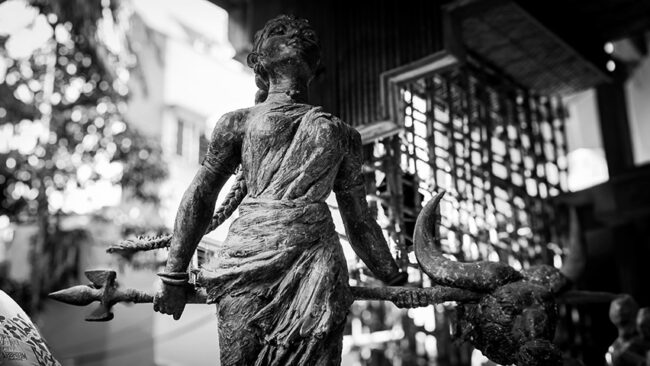
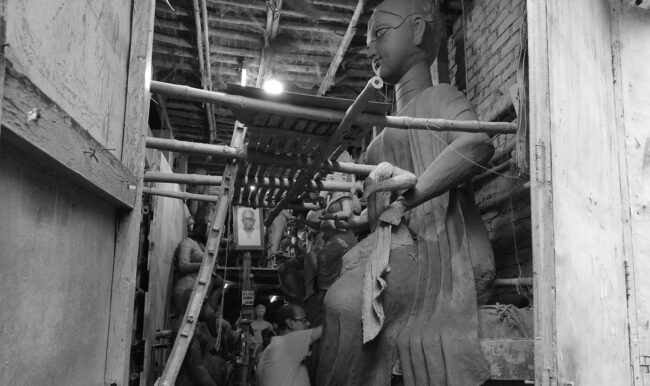
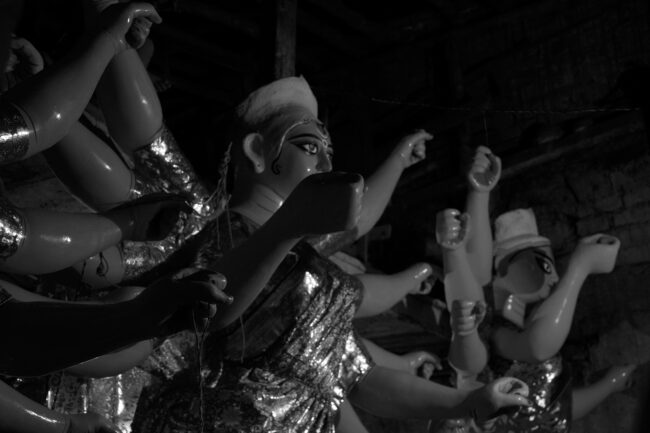
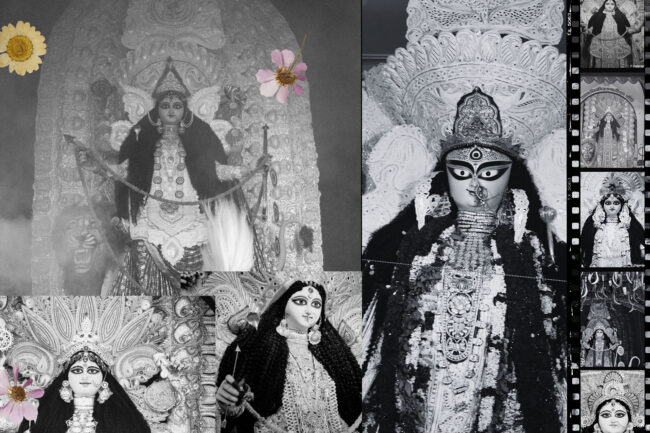
Ten Arms, Thousand Themes: Kolkata’s Durga Puja as Living Museum

For a few incandescent days each autumn, Kolkata stops being a city and remembers it is a story. The pavements turn into footnotes, the avenues into chorus lines, and every neighborhood—para, lane, bylane—becomes a luminous stanza in the poem of Durga Puja. Clay breathes. Bamboo whispers. The conch calls. And the Mother arrives—not only as…

The Evolution of Durga Puja in Bengal

Mythical and Scriptural Roots: The worship of goddess Durga originates from ancient Hindu scriptures, especially the Devi Mahatmya (part of the Markandeya Purana, roughly composed by the 5th-6th century CEM. This text celebrates the divine feminine power (Shakti) who defeats the buffalo demon Mahishasura, symbolizing cosmic victory of good over evil. Early Bengal Practices: While…

Creation of the Saktis: Philosophical and Mythological Details

1. Devi as Primordial Power The text opens by establishing Nirguna Bhagavati—the formless, transcendent goddess—as the foundational reality from which all existence emerges. Identified variously as Adi Parashakti or Brahman, she is posited as both the origin and sustaining principle of the cosmos. All creative, preservative, and dissolving forces in the universe ultimately derive their…