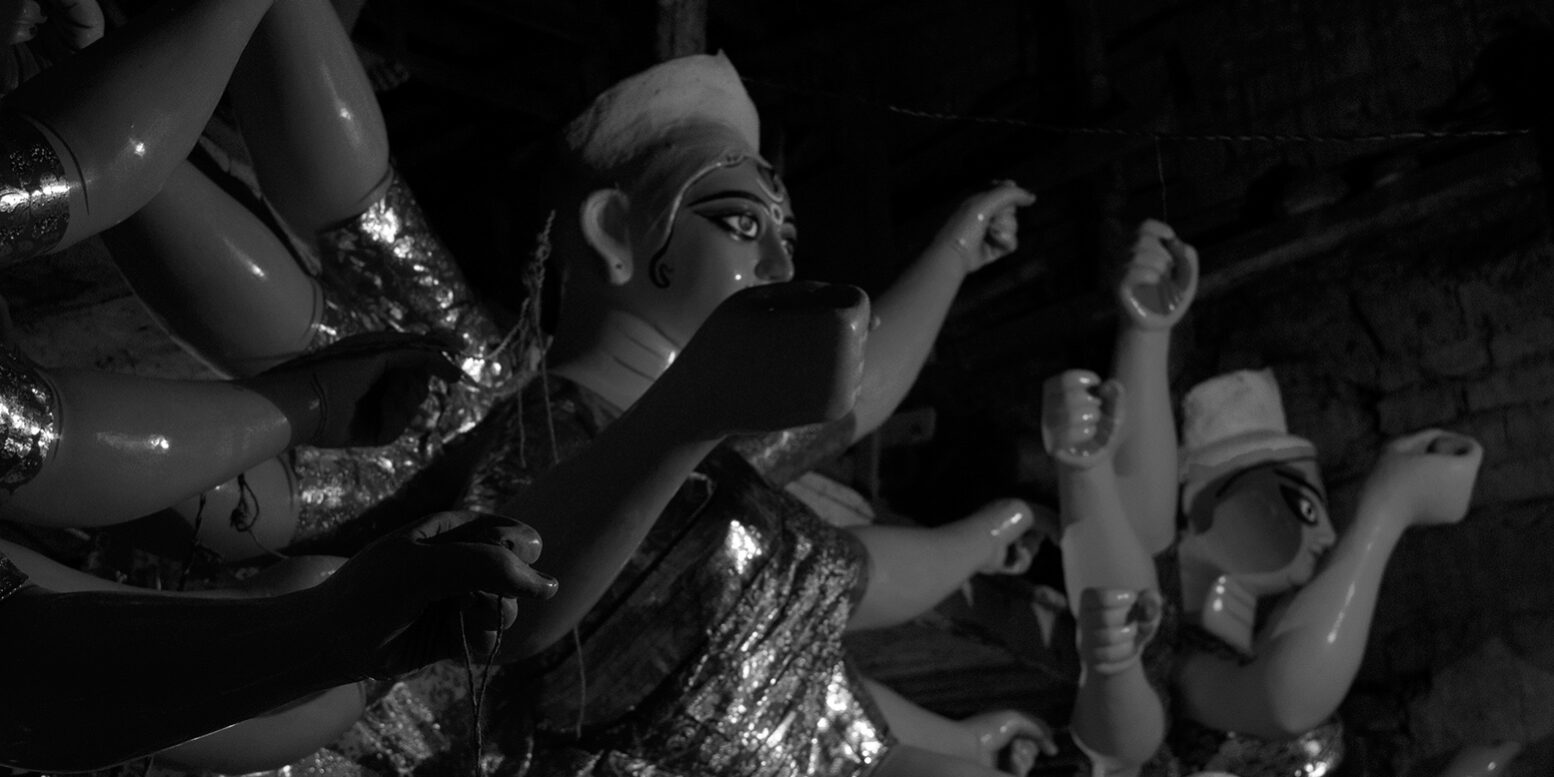
When examining Durga’s characterization as Adi Prakriti within Shaktism, one confronts a nuanced and foundational strand of Hindu philosophy. Durga, or Mahadevi, is not simply positioned as a divine figure but as the primordial substratum and creative impetus of the entire cosmos. This theme is especially pronounced in the Devi Bhagavata Purana and other core Shakta texts, where the Goddess is described as both the source and the substance of all existence.
**Durga as Adi Prakriti: The Primordial Principle**
To clarify, “Prakriti” traditionally denotes the undifferentiated, primordial matrix from which the universe manifests. “Adi” or “Mula” signifies the original or root aspect. Thus, Adi Prakriti refers to the absolute origin—the first cause—of creation.
**Comparison: Shakta and Samkhya Perspectives**
A pivotal distinction emerges when comparing the Shakta interpretation of Prakriti with that of Samkhya philosophy. In classical Samkhya, Prakriti is inert, requiring the presence of Purusha (consciousness) to activate its evolutionary process. Purusha, in this schema, is passive awareness.
Shaktism fundamentally reimagines this dynamic. Here, Durga as Adi Prakriti is inherently conscious and dynamic; she embodies both matter and the will that animates it (Iccha Shakti). The Goddess is not merely material—she is the creative intelligence shaping both matter and consciousness. In this sense, the Divine Mother is the autonomous originator, whose own nature and will initiate cosmic evolution.
**Mythological Foundations in Shakta Texts**
The Devi Bhagavata Purana asserts that prior to creation, only the Mahadevi existed—luminous, self-subsistent, transcending all attributes. Motivated solely by her inscrutable will (Iccha Shakti), she initiates creation through an act of divine play (Lila). She manifests Purusha (the principle of consciousness, often identified with Shiva or Brahman) and subsequently, the Trimurti—Brahma, Vishnu, and Shiva—assigning them their cosmic roles. All derive their power and being from her.
Following this, Adi Prakriti unfolds into the various tattvas, or fundamental principles of reality: Mahat (cosmic intellect), Ahamkara (ego), Manas (mind), the sense and action organs, the subtle elements (tanmatras), and the gross elements (mahabhutas). Unlike Samkhya, where evolution is mechanistic, Shaktism emphasizes that Devi herself is the conscious agent orchestrating this process—she is both the material and efficient cause.
**Adi Prakriti and the Gunas**
Adi Prakriti is also the source of the three gunas: Sattva (purity), Rajas (activity), and Tamas (inertia). These qualities underlie all phenomena in the manifested universe. As Trigunatmika, she embodies the gunas; as Trigunatita, she transcends them, exercising control over their interplay. This theological perspective accounts for the diversity of creation and the various manifestations of the Goddess—Saraswati (predominantly Sattvic), Lakshmi (Rajasic), and Kali or Durga (transcending or balancing all three, often channeling Tamasic power for transformative destruction).
Adi Prakriti as Mahamaya – The Creative Principle of Illusion
Within Hindu philosophical thought, Adi Prakriti and Mahamaya are fundamentally interwoven concepts. Adi Prakriti’s association with Maya is intrinsic; Maya operates as her inherent faculty, concealing her ultimate, formless essence and projecting the cosmic multiplicity and duality that constitute the phenomenal universe.
It is essential to clarify that, in this context, Maya is not mere deception. Rather, it represents the divine creative mechanism through which the unmanifest Adi Prakriti expresses herself as the manifest cosmos. The phenomenal world is real insofar as it is her manifestation, but it lacks independent reality separate from her essential nature.
From the standpoint of spiritual liberation, recognizing Maya as the dynamic power of Adi Prakriti is central. When a devotee discerns that the apparent “illusion” is, in fact, the Goddess’s creative play, it becomes possible to transcend the binding effects of Maya and apprehend her true, unmanifest reality.
Adi Prakriti and the Cyclical Process of Creation, Preservation, and Dissolution
As the ultimate Adi Prakriti, Durga is understood as the principal agent behind the cyclical processes of creation, maintenance, and dissolution within the cosmos:
– In the form of Iccha Shakti (will), she initiates the process of Creation (Srishti).
– Through Jnana Shakti (knowledge) and Kriya Shakti (action), she sustains and preserves (Sthiti) the universe, manifesting her benevolence and wisdom.
– In the aspect of Kali, representing her formidable power, she brings about Dissolution (Pralaya), reabsorbing all phenomena into her unmanifest state and thereby facilitating the renewal of the cosmic cycle.
Durga, as Adi Prakriti, occupies the highest position in Hindu cosmology and metaphysics. She is not limited to the role of a consort or a functional manifestation; rather, she is the foundational, primordial, and conscious principle governing creation, maintenance, and dissolution. Her cosmic play (Lila) encompasses all existence. By understanding and surrendering to her as Adi Prakriti, a devotee may attain liberation and realize unity with the Divine Mother. Durga Puja, therefore, signifies not only ritual devotion but also an acknowledgment of the ultimate source of all being.