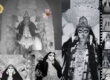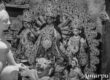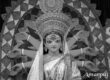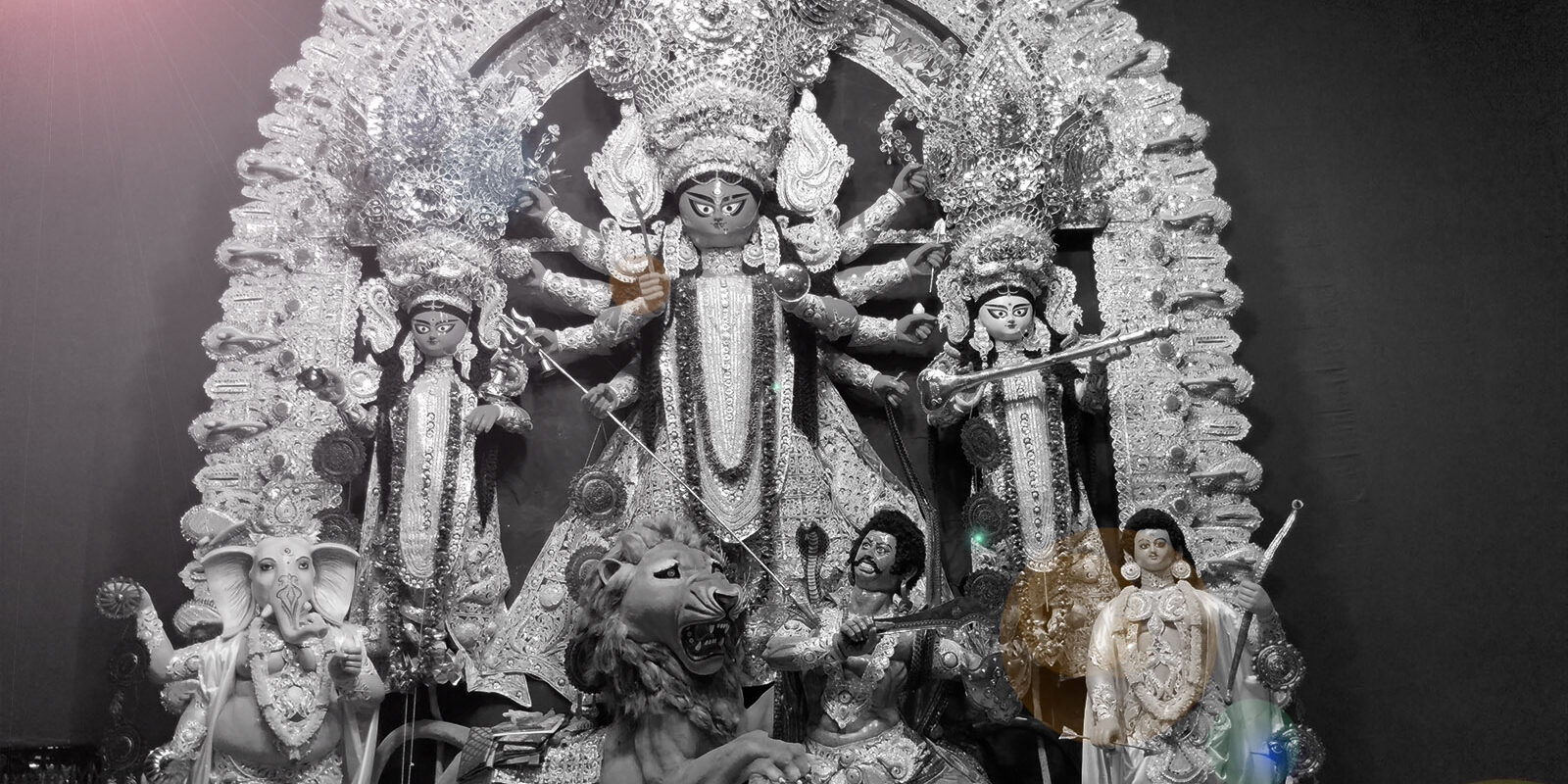
Though the worship of the Goddess existed in ancient India and several other countries, it was in Bengal that Durga Puja began, expanded, and became a grand festival. Scholars differ on who initiated it and when. Some believe that Raja Kangsa Narayan of Tahirpur in Rajshahi (now in Bangladesh) began Durga Puja in the late 16th or early 17th century. Others say it was initiated by Uday Narayan, father of the Manusamhita commentator Kulukabhatta, and Kangsa Narayan only followed the tradition.
However, according to Bengali historians, the first Durga Puja in Bengal was held in 1606 CE at the house of Raja Bhabananda Majumdar of Nadia (ancestor of Raja Krishnachandra).
In Kolkata, the first recorded Durga Puja was held in 1610 CE at the Sabarna Roy Choudhury family’s Atchala Mandap in Barisha (now in Behala’s Sakher Bazar area). This was before Kolkata became a city. This mandap holds historical significance as, on June 10, 1698, Charles Eyre, son-in-law of Job Charnock, discussed the acquisition of the three villages – Sutanuti, Govindapur, and Kalikata – with the Roy Choudhury family in this very mandap.
The second oldest Puja in Kolkata is believed to be at the home of Govindaram Mitra of Kumartuli, one of the earliest black zamindars of British Kolkata. Though the exact year isn’t confirmed, it likely began in the early 18th century.
Then came the celebrated Durga Puja of Maharaja Nabakrishna Deb of Sovabazar Rajbari, who, along with his grandson Radhakanta Deb, played a major role in transforming a religious event into a grand social festival full of pomp and celebration. After assisting the British in the Battle of Plassey in 1757, Nabakrishna was rewarded with wealth and the title of Maharaja. Within three months, he built a palace, a dance hall, and a Durga mandap and began Durga Puja. The dance hall famously hosted baiji (courtesan) performances for British officers, and though its origins may be controversial, it still stands as a witness to the heritage of Bengali festivities.
After Plassey, as Kolkata became the commercial hub of Eastern India, many became wealthy by aiding British trade. Without many avenues to showcase wealth, the elite used Durga Puja as a means of displaying affluence. As wealth grew, so did the number of Pujas.
Notable early family Pujas include:
-
Mitra Bari of Chakraberia Road (1757)
-
Dey Bari, Joyram Mitra Street (1760)
-
Ramanath Ghosh’s house, Pathuriaghata (1784)
-
Chhatubabu-Latubabu’s house, Beadon Street (1784)
-
Dutta Bari, Hatkhola (1785)
-
Akrur Dutta’s house, Bowbazar (1786–87)
-
Deb Bari, Intali (1790)
-
Pritiram Mar’s house, Janbazar (1790, later known as Rani Rashmoni’s house)
-
Bishwanath Motilal’s house, Bowbazar (1799)
-
Mallik Bari, Darponarayan Street (1809)
-
Basumallik Bari, College Square (1831)
-
Khelat Ghosh’s house, Pathuriaghata (1846)
As wealth and influence spread to surrounding districts and villages, landlords unable to afford grand Durga Pujas organized other festivals, particularly Jagaddhatri Puja. The Guptipara Barowari Puja was born around 1790, when twelve local youths collected donations to continue a Jagaddhatri Puja at a zamindar’s house. The term ‘Barowari’ (from 12 friends) originated here.
Though Barowari Puja started in the villages, it took 120 more years to reach Kolkata. Until then, Durga Puja was largely private, family-based. The Pujas were not truly public or inclusive, partly due to class and caste restrictions.
In the 19th century, social reform and the spread of Western education empowered the common people. Movements like the Sannyasi and Indigo Rebellions and eventually the Sepoy Mutiny (1857) helped bridge gaps between the elite and commoners. Cultural revolutions followed, such as the founding of National Theatre in 1872, allowing commoners to access entertainment previously reserved for the elite.
By the early 20th century, nationalist movements intensified, especially after Lord Curzon’s Partition of Bengal (1905). The Swadeshi Movement united educated and uneducated, rich and poor, giving rise to the first truly community Durga Puja in Kolkata in 1910. This was organized by the Bhabanipur Sanatan Dharmotsahini Sabha near the Adi Ganga in south Kolkata.
Soon after, similar initiatives were seen in Ramdhan Mitra Lane (1911) and Sikdar Bagan (1913).
Still, there was a distinction between Barowari (jointly organized) and Sarbojanin (open to all). Barowari was organized by multiple families, but Sarbojanin broke class, caste, and religious barriers — anyone could participate.
Revolutionary Atindranath Bose initiated the first Sarbojanin Durga Puja in 1926 through his Simla Byayam Samiti in north Kolkata. Prominent figures like Bhupendranath Dutta and Netaji Subhas Chandra Bose were associated with it. Around the same time, the Nebubagan Barowari became the Bagbazar Sarbojanin.
During the freedom struggle, revolutionaries used Puja gatherings as a cover to organize and unite people. Thus, Durga Puja evolved into a truly public and national festival.
After independence, the number of Sarbojanin Pujas in Kolkata steadily grew.
Today, Kolkata’s Durga Utsav flows through three parallel traditions:
-
Family (Bonedi) Pujas – steeped in tradition and devotion
-
Barowari Pujas – showcasing responsibility and community spirit
-
Sarbojanin Pujas – vibrant, inclusive, and public celebrations
The city now celebrates a fusion of heritage, devotion, community, and joy.