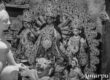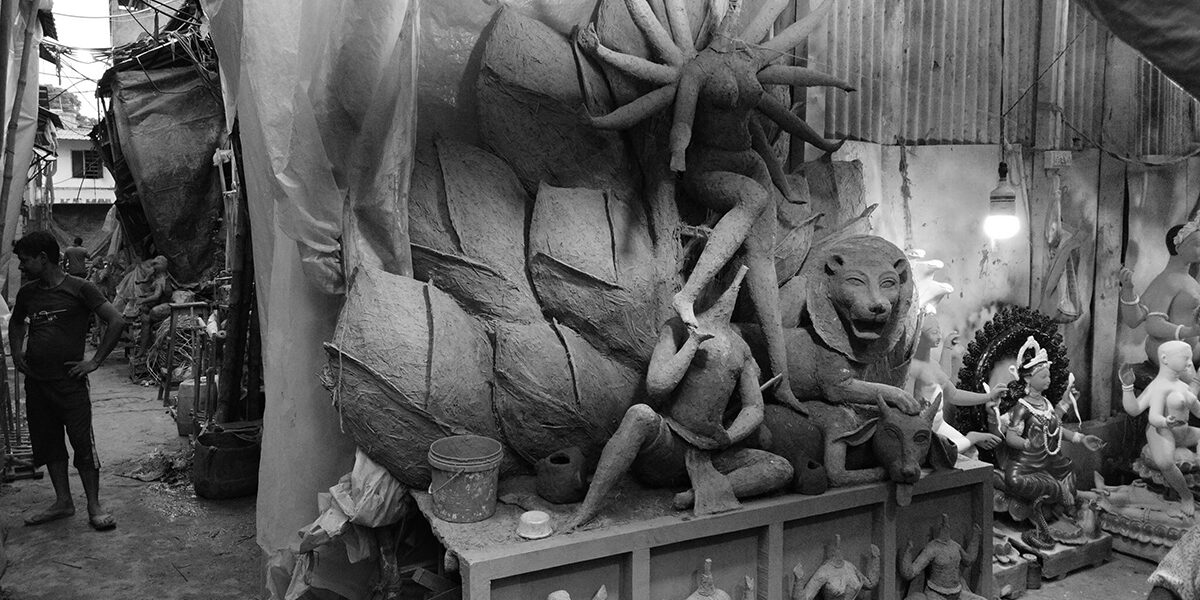
Kumartuli, which translates to “the potters’ quarter,” emerged in North Kolkata during the late 18th century, following the British establishment of Fort William after the Battle of Plassey in 1757. In the aftermath, the British administration organized the city by allocating specific neighborhoods to various artisan communities, designating Kumartuli for potters and idol-makers.
Initially, Kumartuli artisans primarily produced functional earthenware for local markets. However, as Durga Puja celebrations gained prominence—moving from private estates of affluent Bengalis to larger community festivals known as Baroari Puja—the role of these artisans evolved significantly. They began specializing in the crafting of religious idols, particularly those of Goddess Durga. Over time, the artistry and reputation of Kumartuli idol-makers became widely recognized, establishing their work as the benchmark for both devotional significance and artistic excellence in Bengali culture.
The Process of Durga Idol Creation in Kumartuli: An Academic Overview
The crafting of Durga idols in Kumartuli follows a complex, culturally rich sequence of steps, each deeply embedded in tradition and communal symbolism.
1. Acquisition of Sacred Clay & Ritual Commencement
The process begins on the auspicious occasion of Akshaya Tritiya, typically occurring in April or May. Artisans collect clay from the banks of the Hooghly River. A significant ritual element involves incorporating “punya mati” (sacred soil) from locations such as brothels, reflecting the goddess’s inclusive nature and the community’s ritualistic customs.
2. Construction of the Armature
A bamboo and straw framework, known as the ‘chakra,’ is constructed to form the basic anatomical structure of the goddess and her entourage. Artisans utilize jute string to bind the materials securely, establishing the foundation for subsequent modeling.
3. Application and Modeling of Clay
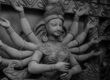
Multiple layers of river clay—mixed with rice husk and straw for reinforcement—are applied onto the framework. The timing of this process is crucial, as Bengal’s monsoon season presents challenges in drying and shaping the idols. Artisans meticulously sculpt facial features, hands, and drapery by hand. Notably, the heads are often modeled separately for greater detail, then attached to the bodies.
4. Chakkhu Daan: The Painting of the Eyes
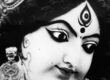
A pivotal ritual, “Chakkhu Daan” (bestowing the eyes), is performed at dawn on Mahalaya. This is accompanied by fasting and prayer, and is regarded as the moment the idol is spiritually animated.
5. Painting and Decoration
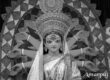
Once the clay is thoroughly dried, the idol is painted with base coats (usually white or yellow), followed by traditional hues such as pink, ochre, and red. Artisans paint the sari, ornaments, weapons, and the lion mount. Hair—often made from jute or actual hair—is affixed, and the idol is dressed in elaborate fabrics and adorned with jewelry and flowers.
6. Final Finishing and Ornamentation
The final stage involves varnishing and the addition of ‘Daker Saaj’ (traditional or contemporary decorative elements). The idols are then prepared for transportation, either for public display in community pandals or for shipment abroad.
Through this intricate, multi-stage process, artisans in Kumartuli transform simple materials into sacred objects of immense religious and cultural significance.
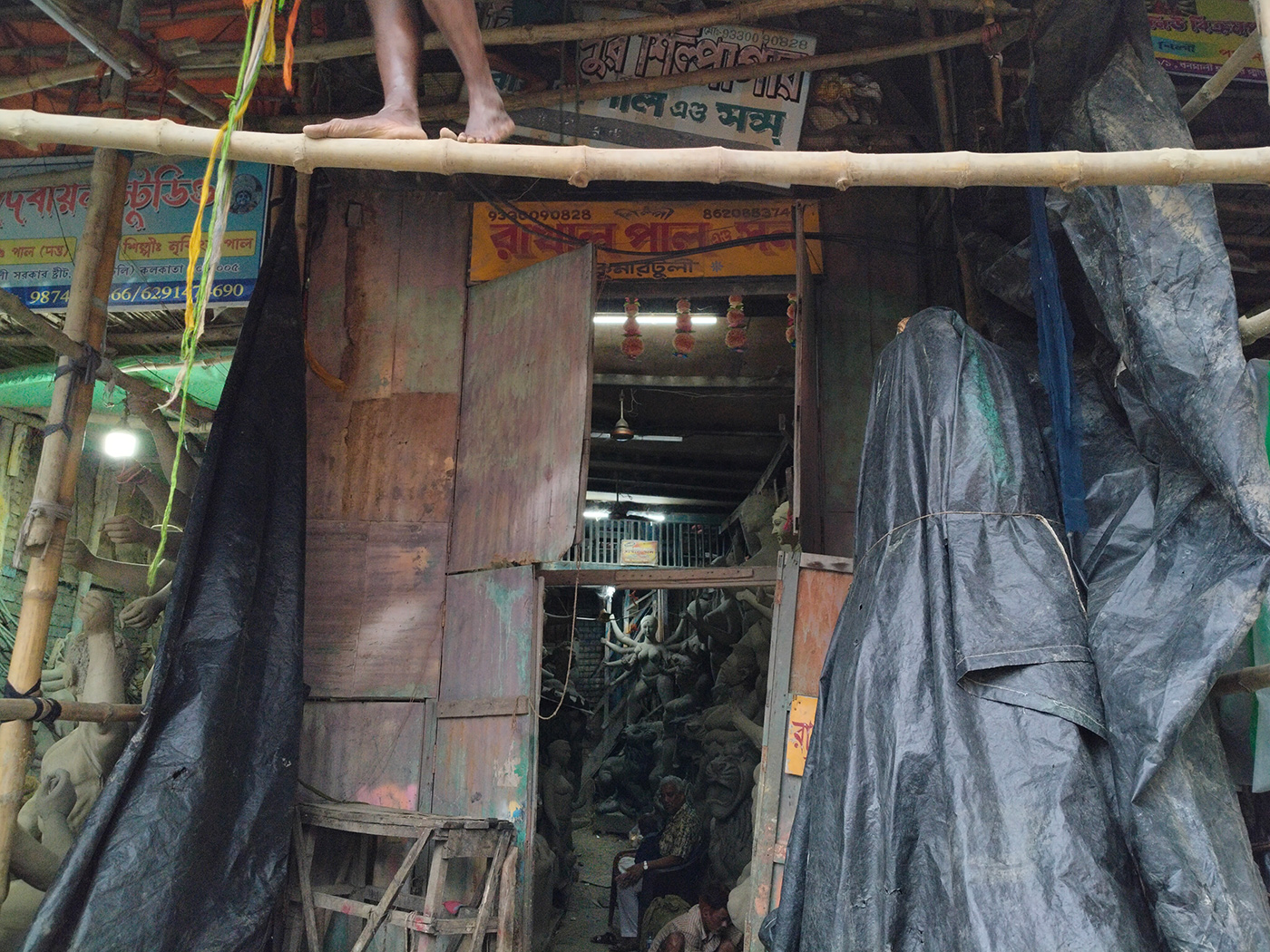
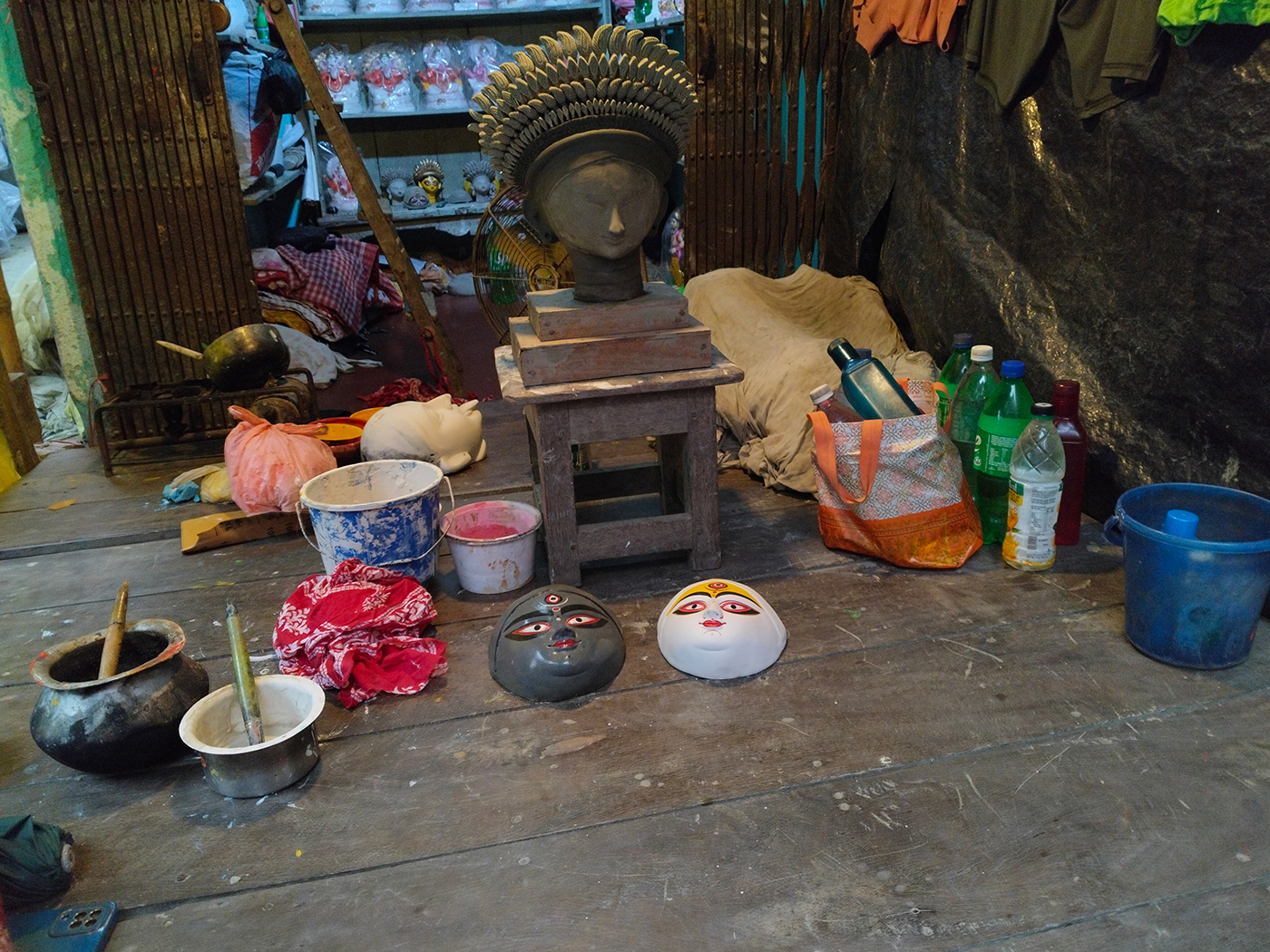
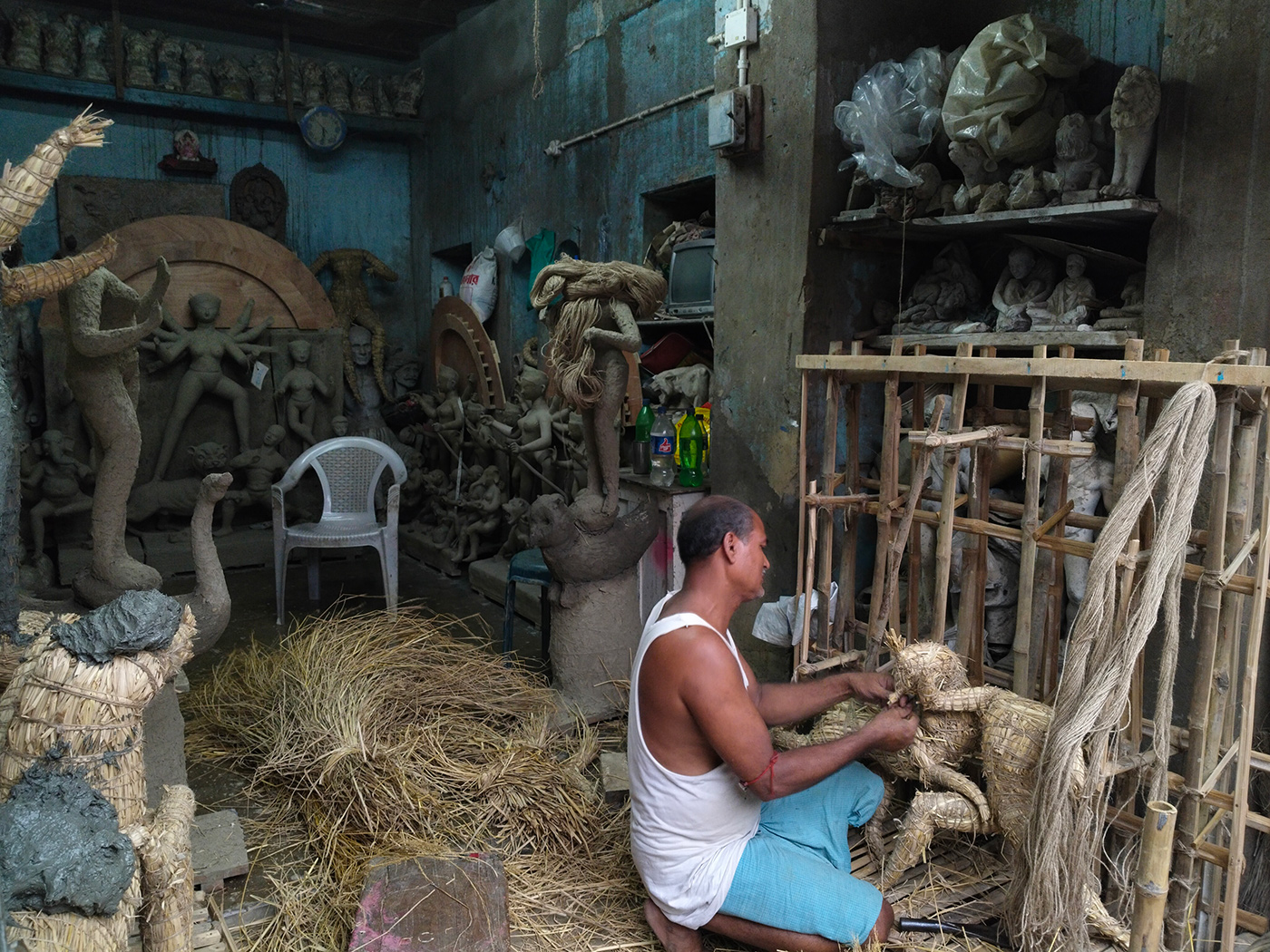
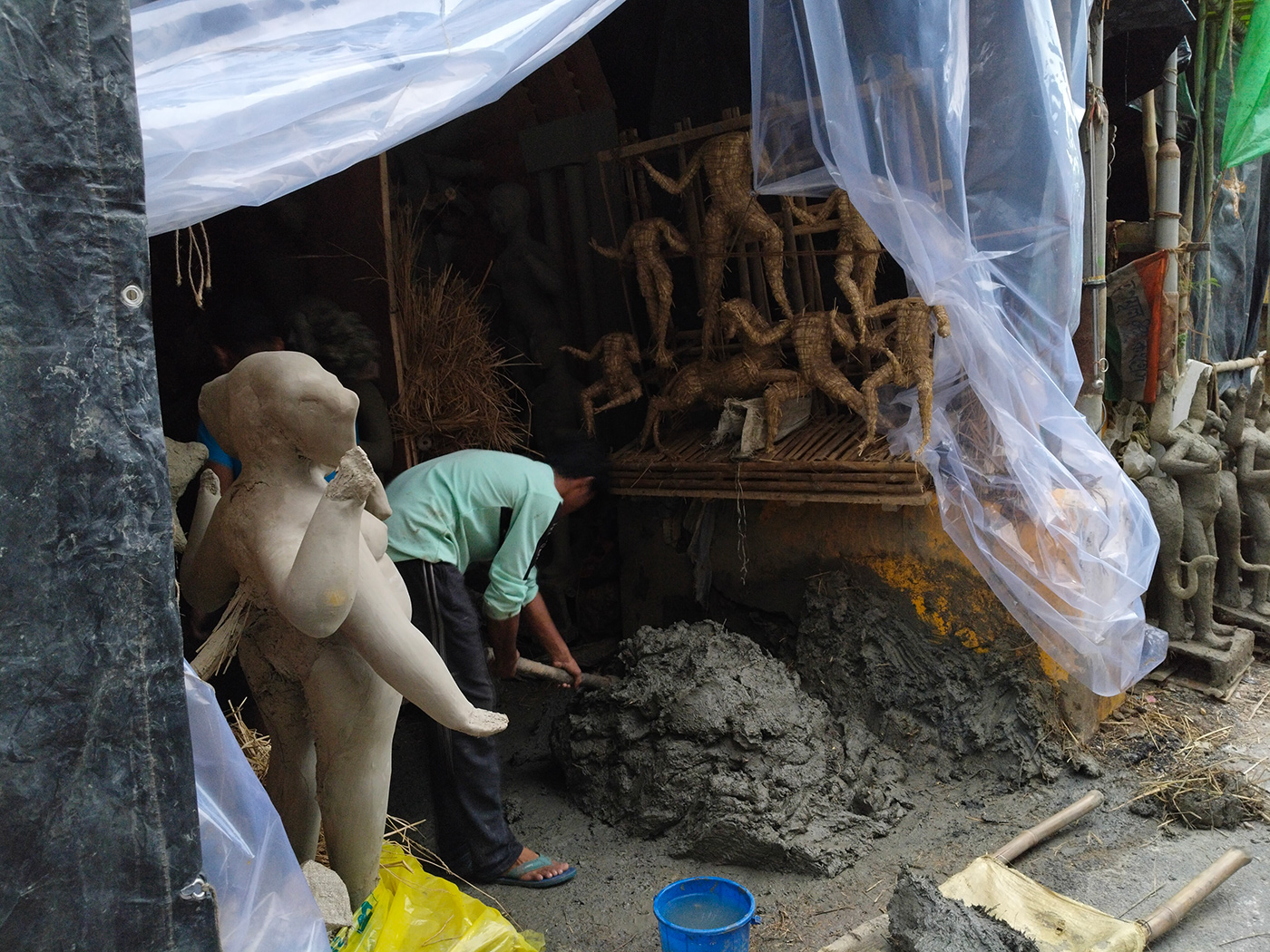
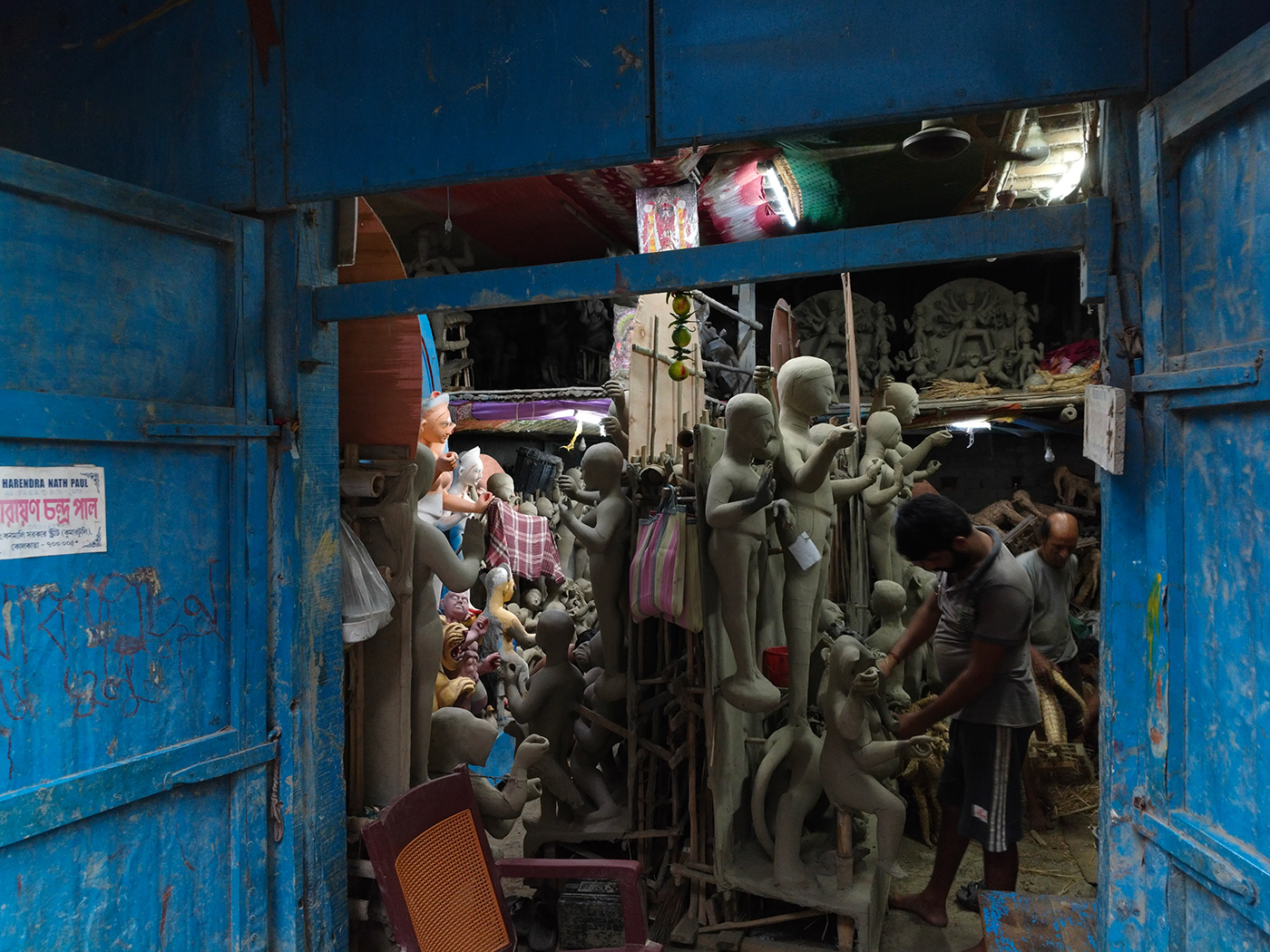
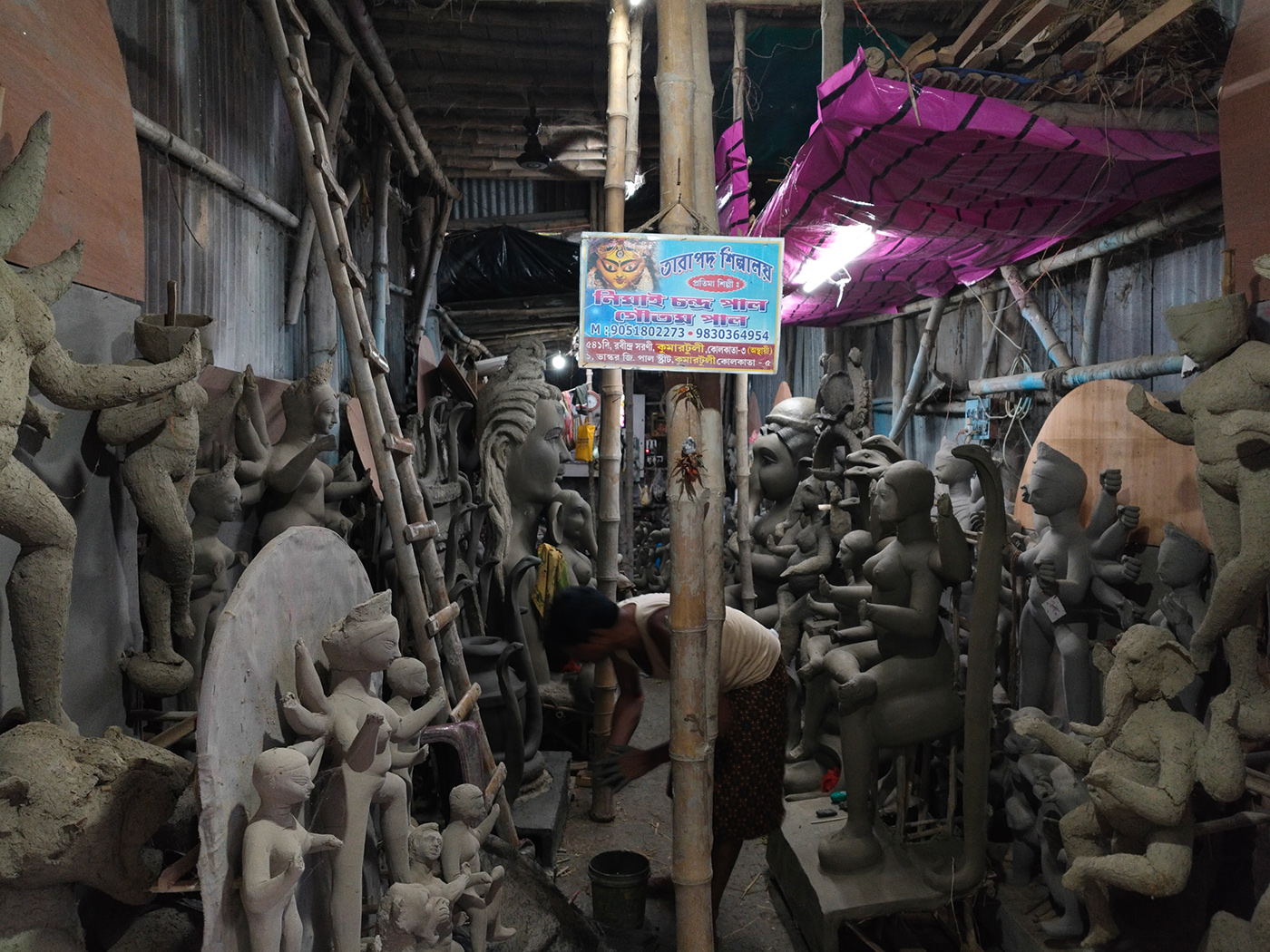
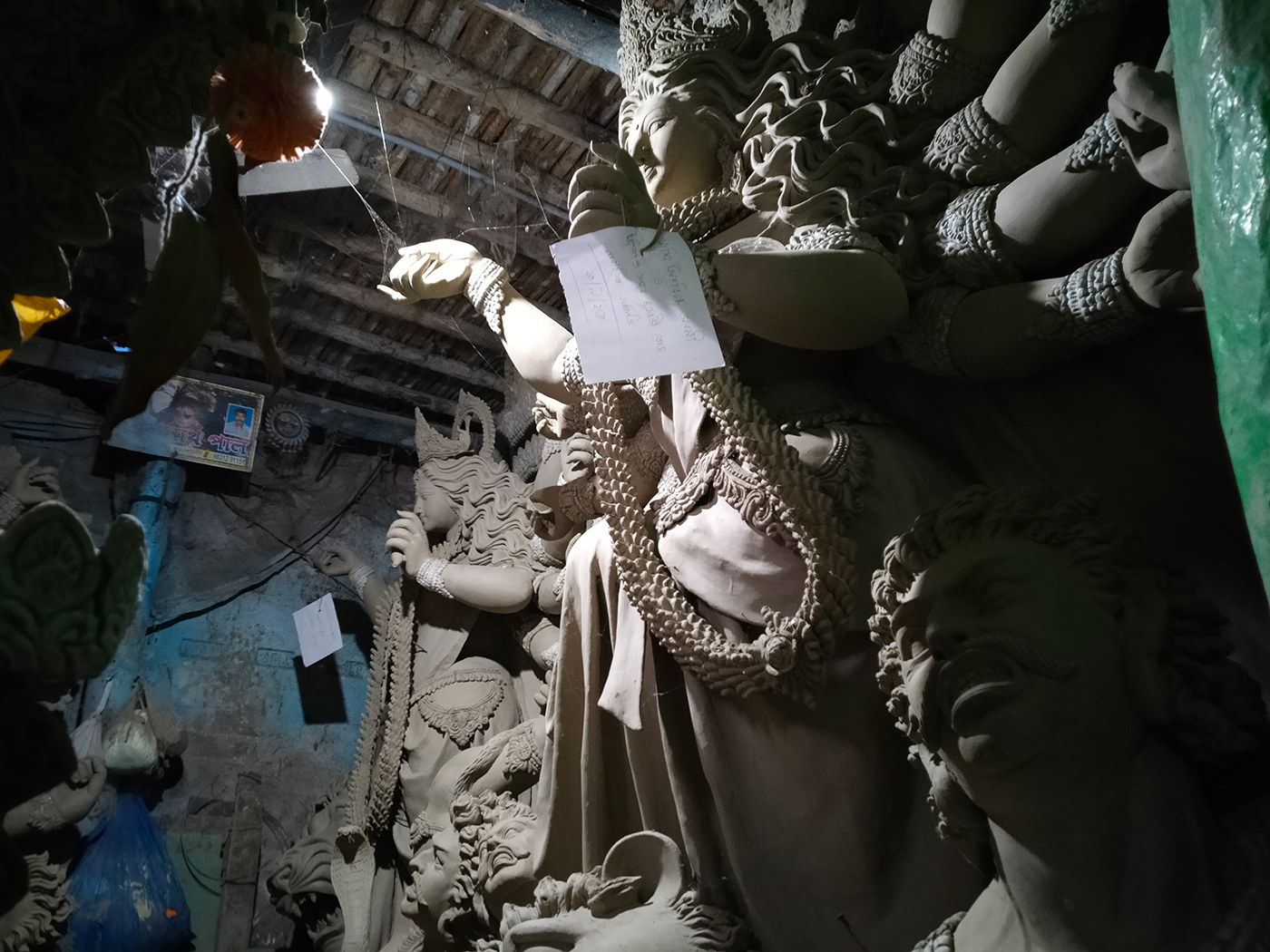
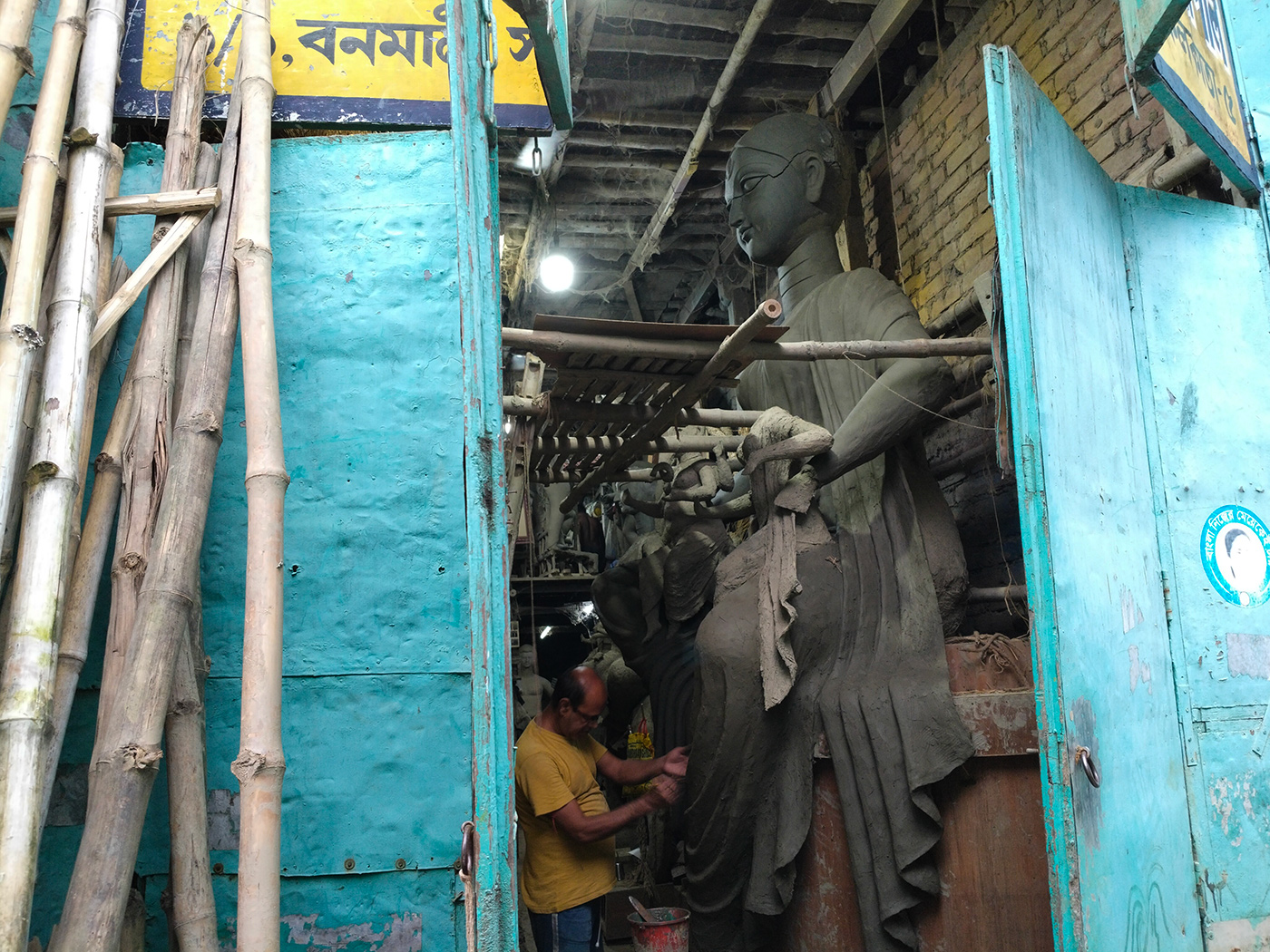
Image Courtesy : Sayan Biswas (Please do not use without permission)