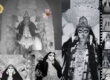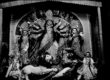
The entire mythological framework of Durga Puja is enshrined in the Devi Mahatmya (“The Glory of the Goddess”), a foundational text of Shaktism that constitutes chapters 81 through 93 of the Markandeya Purana. Composed around the 5th or 6th century CE, this text is the first in high Sanskrit literature to elevate the Goddess to the status of the supreme, ultimate reality. Also known as the Durga Saptashati or Chandi Path, it contains 700 verses that are recited verbatim during the festival.The Devi Mahatmya masterfully weaves together philosophical concepts like Maya (cosmic illusion), Shakti (divine power), and Prakriti (material nature) into a narrative of a formidable, all-powerful feminine divine who surpasses even the great gods Brahma, Vishnu, and Shiva.
The Narrative Structure and Key Myths
Folio painting from a Devimahatmya illustrating Vishnu vanquishing the demons Madhu and Kaitabha, with Devi in the background wikipedia
The Devi Mahatmya is structured into three distinct episodes, each detailing the Goddess’s triumphs over demonic forces that threaten cosmic order.
First Episode: The Slaying of Madhu and Kaitabha
The text begins with King Suratha and a merchant named Samadhi, both exiled and dispossessed, seeking wisdom from the sage Medhas. They question why they still feel attachment to those who wronged them. The sage explains this is the power of Mahamaya (the great illusion), a manifestation of the Goddess herself.He then recounts the first great myth. During a period of cosmic dissolution, two demons, Madhu and Kaitabha, emerged from the earwax of a sleeping Vishnu. They attempted to kill Brahma, the creator, who was seated on a lotus growing from Vishnu’s navel. Brahma invoked the Goddess as Yoganidra (the deep sleep of Vishnu), pleading with her to withdraw so Vishnu could awaken. The Goddess obliged, and Vishnu fought the demons for five thousand years before ultimately vanquishing them, with Devi’s subtle power ensuring his victory. This establishes the Goddess as the power that even enables the preserver god to act.
Second Episode: The Annihilation of Mahishasura
This is the central and most celebrated myth of Durga Puja. The buffalo-demon Mahishasura defeated the gods and usurped control of the heavens, protected by a boon that made him invincible to any man or god. The displaced gods, led by the Trimurti, pooled their divine energies (tejas), which coalesced into a luminous, fiery form—the magnificent goddess Durga.
Embodiment of Divine Power: Each god contributed to her form and weaponry. Shiva gave his trident, Vishnu his discus, Vayu his bow and arrows, and Indra his thunderbolt. The Himalayas gifted her a lion to ride. She was a unified embodiment of all divine might.
The Cosmic Battle: Durga’s confrontation with Mahishasura was a fierce, nine-day battle. The demon was a master shapeshifter, turning into a lion, a man with a sword, and an elephant, but Durga countered his every move.
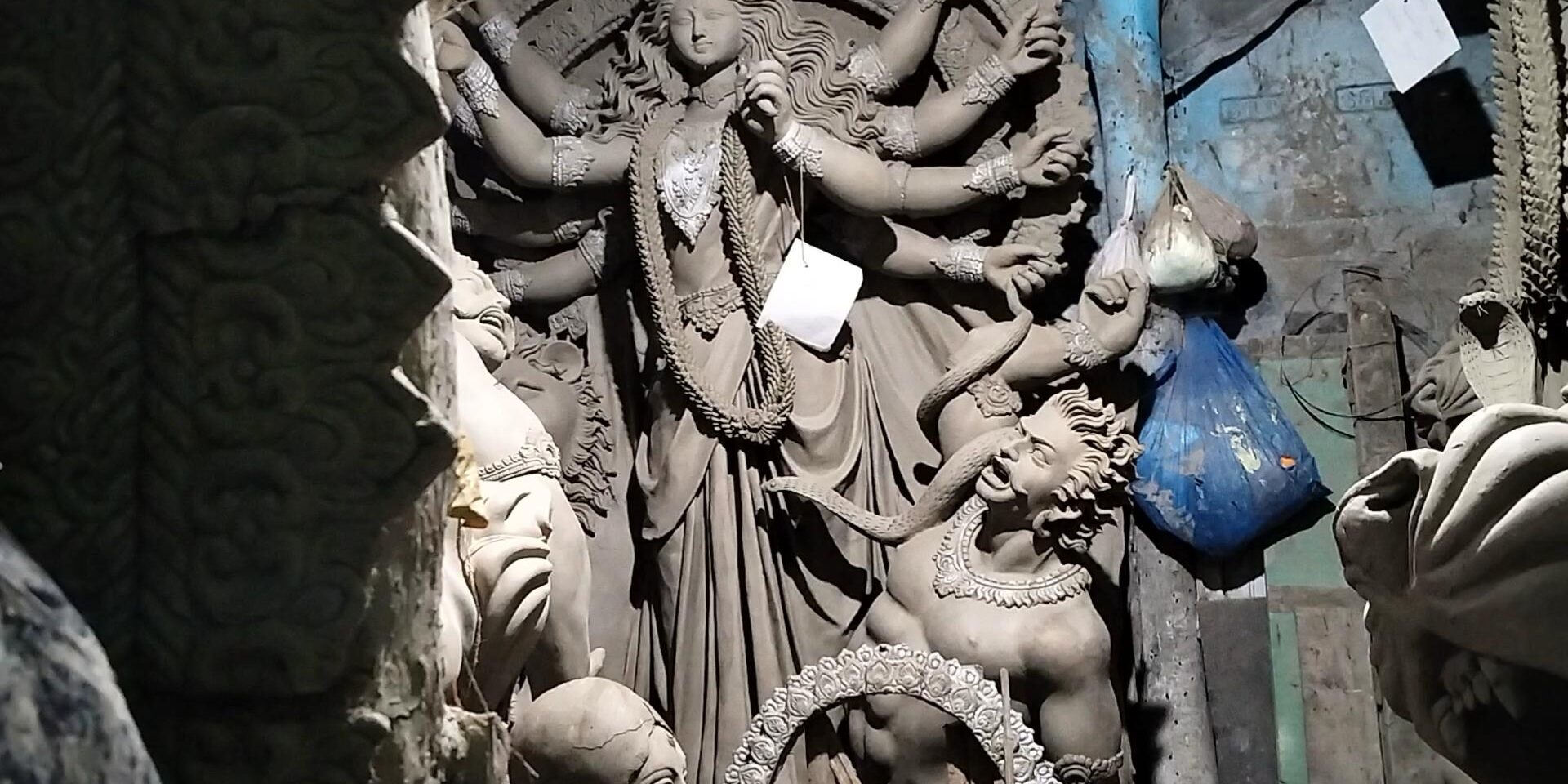
The Climax: Finally, as Mahishasura reverted to his buffalo form, Durga pinned him down with her foot, pierced him with her trident, and beheaded him with her great sword. This act restored cosmic balance and earned her the name Mahishasuramardini (the Slayer of Mahishasura). Her serene expression, even in the heat of battle, signifies that her violence is not born of anger but of a divine necessity to restore order.devdutt+2
Third Episode: The Defeat of Shumbha and Nishumbha.In the final section, the Goddess confronts the demon brothers Shumbha and Nishumbha, who had also conquered the three worlds. In this battle, Durga manifests several other powerful forms from her own being to combat their vast army.The Matrikas: From the bodies of the male gods, fierce female counterparts known as the Saptamatrikas (Seven Mothers) emerged to assist Durga.
Chamunda: When the demon generals Chanda and Munda attacked, the benign form of Durga became enraged. From her forehead sprang the terrifying, emaciated goddess Kali or Chamunda, who swiftly defeated them.
Raktabija: The most formidable demon was Raktabija, whose every drop of blood that touched the earth created a clone of himself. As the battlefield filled with his duplicates, Durga commanded Kali to drink the blood from his wounds before it could fall. With his power of regeneration neutralized, Raktabija was finally destroyed. After vanquishing the remaining demons, including Shumbha and Nishumbha, peace was restored. The text concludes with the gods singing hymns of praise, extolling the Goddess as the source of all existence—the one who is both motherly and martial, gentle and fierce, and utterly invincible.
The stories are allegories for the internal spiritual battle:
Mahishasura represents the entrenched ego and brutish, ignorant forces within the human psyche. The Demons (Shumbha, Nishumbha, Raktabija) symbolize multiplying desires, negative thoughts, and attachments. Durga’s Weapons represent the virtues and disciplines (detachment, courage, wisdom) needed to overcome these inner demons. The Lion signifies controlled animalistic passion and willpower. Thus, the Puranic myths recited during Durga Puja serve as a powerful spiritual guide, reminding devotees of the divine feminine power that resides within, capable of destroying all obstacles on the path to liberation.
Image Courtesy : Sayan Biswas (Please do not use without permission)